
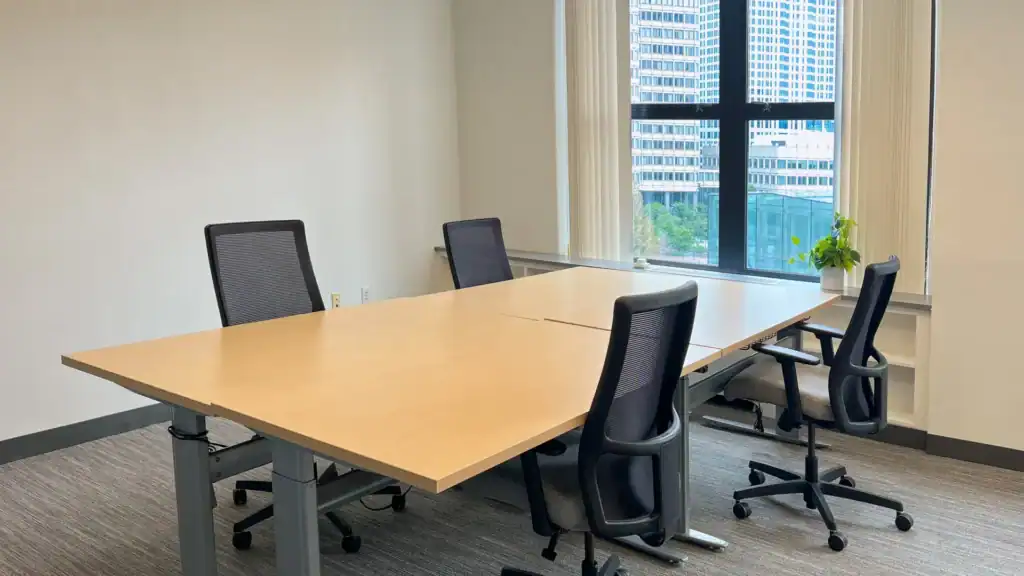
Bisnow Boston covers the structural shift in Greater Boston’s coworking market – away from downtown and toward the suburbs where LocalWorks has been building all along.
Bisnow’s Boston bureau published a detailed look at the shifting geography of coworking demand in Greater Boston this week – and the picture it paints is one that LocalWorks has been preparing for since the company’s earliest days.
The story is straightforward: downtown coworking is contracting while suburban operators are growing. The urban coworking market in Greater Boston has declined approximately 5% in the past year, according to Lincoln Property Company Director of Research Peter Conway. Meanwhile, suburban operators are posting strong occupancy numbers, opening new locations, and in some cases running out of space entirely.
LocalWorks sits at the center of that shift.
The LocalWorks Numbers
Bisnow spoke directly with LocalWorks CEO Barry Greenfield for the piece, and the figures he shared tell a clear story. LocalWorks opened nine locations in 2020 alone – during the height of the pandemic. The company now operates 7 New England locations, with a smaller presence in Washington D.C. and Chicago. Portfolio-wide occupancy stands at 85%.
The Wellesley location tells an even sharper story. The first Wellesley space has been sold out since August 2020. Demand was strong enough that LocalWorks opened a second Wellesley location to meet it.
Private offices start at $495 per month, and the portfolio is composed of 95% private offices – a deliberate choice that reflects who LocalWorks is actually serving.
Who Is Filling These Spaces
Greenfield was direct with Bisnow about the market LocalWorks targets and what is driving demand right now.
“The market where we work, 30-60-year-old professionals in the suburbs, we don’t see them going back downtown as frequently as they used to,” Greenfield told Bisnow. “The opportunity to be close to home but out of the house seems to be something people are very interested in.”
That framing is important because it clarifies what suburban coworking demand actually is – and what it is not. This is not a spillover from downtown. These are professionals who live in the suburbs, who never wanted a long commute, and who now have a permanent reason to avoid one. Hybrid work has given them the leverage to act on that preference, and LocalWorks gives them somewhere to go.
The middle market focus is equally deliberate. As Greenfield put it to Bisnow: “We tend to cater to the middle market where there’s a lot of people who don’t live in 5K SF homes, and they need space to run their business. They need a place to be productive in. We tend to have office prices for just about every budget. We’re not just focused on the enterprise market at the top of the pyramid.”
Private offices from $495 per month, no long-term lease required, clean and quiet space close to home. That is the LocalWorks proposition – and it is filling up.
Why the Suburban Shift Is Structural, Not Temporary
The Bisnow piece draws on broader market data to contextualize what LocalWorks and other suburban operators are experiencing. A survey of Massachusetts corporate representatives, conducted by the Boston Globe and cited in the article, found that 80% said they would embrace a hybrid work model, and 40% expect to shrink their local office footprints.
Those two numbers together explain why suburban coworking is not a pandemic blip. Companies reducing their downtown square footage still need somewhere for employees to work when they are not at home. A private office close to where those employees live – available by the month, without a lease – is the logical answer.
Lincoln Property Company’s Conway also offered context on why suburban markets are structurally better positioned for coworking growth. Downtown coworking has historically been concentrated in high-rent districts where the economics of flexible space are harder to sustain. Suburban markets, with lower base rents and a growing professional population, offer more durable fundamentals for the model LocalWorks runs.
Second-Generation Space: The Model That Makes It Work
A key detail in the Bisnow piece is how LocalWorks has been able to open nine locations in a single year during a pandemic without outside capital. The answer is the company’s focus on second-generation space – previously built-out offices that require minimal investment to bring online.
Rather than signing long-term leases and funding expensive renovations, LocalWorks enters management agreements with property owners, fills previously vacant space with individual tenants, and handles all operations. The result is a portfolio that can expand rapidly in response to demand without taking on the financial risk that has destabilized more capital-intensive coworking operators.
For property owners across Greater Boston’s suburban office market – Route 128 corridor buildings, suburban office parks, professional centers in towns like Wellesley, Needham, and Burlington – this model offers a practical solution to vacancy. LocalWorks generates foot traffic and occupancy revenue from space that might otherwise sit empty through a period of continued uncertainty in the office leasing market.
Greater Boston’s Coworking Geography Is Being Redrawn
The headline of the Bisnow piece captures the market moment precisely: Boston’s urban coworking is receding as suburban players enjoy an uptick in demand. That is not a temporary condition driven by pandemic restrictions. It reflects a durable change in how professionals in Greater Boston think about where they work.
LocalWorks has been building for this moment since 2012, starting in Salem and expanding steadily through communities across eastern Massachusetts. With 7 New England locations now open, a second Wellesley location absorbing overflow from a sold-out first, and occupancy running at 85% portfolio-wide, the company is well positioned to keep growing as the suburban shift accelerates.
About LocalWorks
LocalWorks is a flexible office space management company operating across the suburbs of Metro DC, New England, Greater Chicago, Southeast and West. With private offices available on flexible terms and no long-term lease required, LocalWorks serves professionals, entrepreneurs, and small businesses looking for affordable, quiet workspace close to home.
New England locations include Wellesley, Salem, Beverly, Marblehead with additional locations continuing to open across the region.
Find a LocalWorks location near you: localworks.us
As featured in Bisnow Boston, April 29, 2021. Update was made on June 2, 2026, to reflect new information such as prices, terms and locations.

