
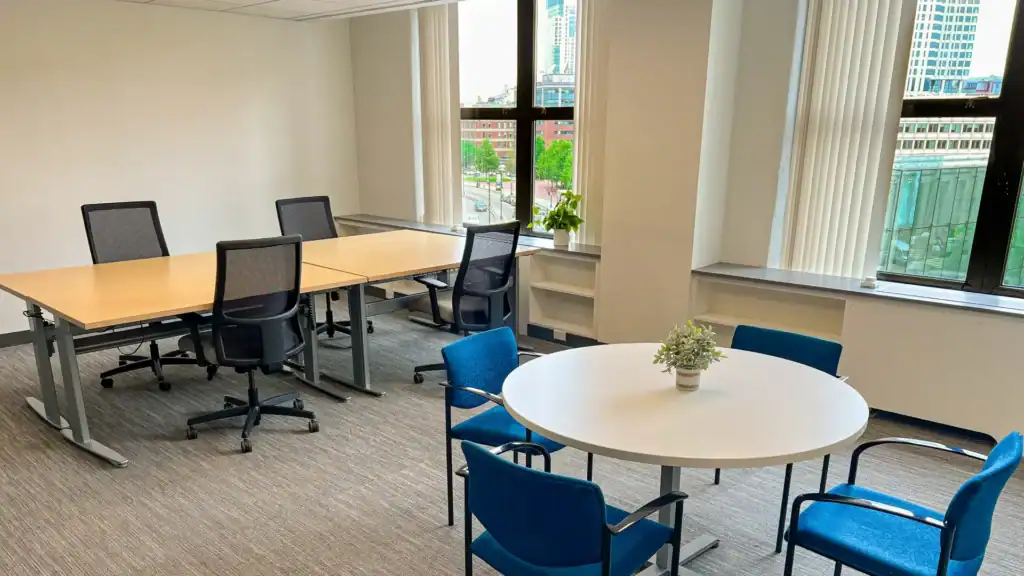
The Boston Globe’s business desk covers the post-pandemic shift to suburban flexible office space, featuring LocalWorks as one of the operators driving the trend across Greater Boston.
The Boston Globe published a feature this weekend on the growing demand for coworking space in Boston’s suburbs – and LocalWorks is front and center.
Reporter Catherine Carlock’s piece documents how the COVID-19 pandemic has permanently shifted where workers want to be. Pre-pandemic, coworking in Greater Boston was concentrated almost entirely in Boston and Cambridge, dominated by urban operators catering to downtown commuters. That geography is changing fast. Workers who relocated to the suburbs or discovered they no longer want a long commute are driving demand for flexible office space closer to home – and operators like LocalWorks, which built its entire model around the suburbs, are seeing the results directly.
The Numbers Behind the Story
The Globe piece gives readers a rare look inside LocalWorks’ growth numbers. Revenue has quadrupled since last fall, when the company opened several new locations and stepped up its marketing across Greater Boston. Locations that have been open approximately six months are running at 85% occupancy.
These are suburban spaces serving 30- to 60-year-old professionals and small companies building satellite office arrangements close to where their teams actually live – not enterprise clients padding occupancy numbers from downtown towers.
LocalWorks founder Barry Greenfield was direct with the Globe about who is filling these spaces: “These aren’t people who were living in the city and coming out into the suburbs. These are people who need space but don’t want to go into the city. They want to be close to home.”
That distinction matters. The suburban coworking demand is not an overflow from downtown – it’s its own market, made up of workers who never wanted to commute to begin with, and now have the leverage to act on that preference.
The Southwest Airlines of Coworking
The Globe’s profile of LocalWorks zeroes in on what sets it apart from the coworking operators it shares the market with. Greenfield describes LocalWorks as the Southwest Airlines of the industry – reliable, clean, affordable, and built around what members actually need rather than what looks good in a design magazine.
No beer fridges. No ping-pong tables. No community managers. What LocalWorks offers is a private office that is clean and quiet, high-speed internet, and a professional address – at a price point accessible to solo practitioners, growing small businesses, and professionals who simply need somewhere to work that is not their kitchen table.
The Globe notes that LocalWorks operates 7 Massachusetts locations and is continuing to expand. The Wellesley location, specifically, is one of several highlighted across the piece as evidence that demand has arrived in communities that historically had no coworking options at all.
Landlords Are Paying Attention
The Globe feature extends beyond individual workers to the commercial real estate industry that is watching this shift unfold. Mike Wilcox, a senior vice president and leasing director at Bulfinch – a commercial real estate firm with office buildings across the Boston suburbs – described flexible office spaces as the direct beneficiaries of a market where tenants want to make short-term commitments and see how conditions evolve.
Wilcox’s firm hosts both Workbar and LocalWorks locations in its portfolio. Despite being a fraction of total square footage, those coworking spaces brought more foot traffic during the pandemic than traditional long-term tenants. That is a meaningful signal for how suburban office landlords will think about their tenant mix going forward.
For property owners sitting on underutilized space in Route 128 corridor buildings, suburban office parks, or professional centers across Greater Boston, the message is clear: flexible coworking operations are generating occupancy and activity where conventional leasing has stalled.
Greater Boston’s Hybrid Work Future
The Globe piece lands in the context of a broader question that no one has fully answered yet: what does office life look like when the pandemic ends?
The emerging consensus, captured in the article through commentary from Ethan Bernstein, an associate professor of organizational behavior at Harvard Business School, is that there is no single answer. Hybrid arrangements will vary by company, by role, and by individual. But the direction of travel is clear enough: white-collar workers will spend less time at a fixed downtown headquarters and more time working from a range of locations – home, a suburban coworking space, or a company satellite office near where they live.
A study cited in the article found that employees place such high value on autonomy over where they work that many would trade traditional benefits including health care coverage, bonuses, and paid time off to secure it. That is a striking data point – and it speaks directly to why demand for accessible, flexible office space in the suburbs is not a pandemic-era anomaly but a structural shift.
LocalWorks was built for exactly this moment.
About LocalWorks
LocalWorks is a flexible office space management company operating across the suburbs of Metro DC, New England, Greater Chicago, Southeast and West. With private offices available on flexible terms and no long-term lease required, LocalWorks serves professionals, entrepreneurs, and small businesses looking for affordable, quiet workspace close to home.
Massachusetts locations include Wellesley, Salem, Beverly, Marblehead with additional locations continuing to open across the region.
Find a LocalWorks location near you: localworks.us
As featured in The Boston Globe, July 4, 2021. Update was made on June 2, 2026, to reflect new information such as prices, terms and locations.

